A Bitcoin voucher is a prepaid code that turns into actual Bitcoin in a wallet. It's the friendliest way to gift crypto to someone who's never bought it — here's how it works.

A Bitcoin voucher (or BTC gift card) is the gentlest on-ramp for a beginner: you buy a code, they redeem it, and real Bitcoin lands in their wallet — no exchange account, no order book, no jargon. It's perfect for gifting. Just make sure the recipient has (or sets up) a wallet, and understand that voucher convenience usually carries a slightly higher fee than buying BTC directly on an exchange.
A Bitcoin voucher is a prepaid code, bought with money or crypto, that the holder later redeems for a fixed amount of Bitcoin. Think of it as a physical or digital "IOU for BTC": the value is denominated in fiat (say €50), and when redeemed, the holder receives that value in Bitcoin sent to their wallet. Brands like Crypto Voucher and various BTC gift-card products work this way, and they're sold both online and, in some countries, at physical kiosks and retail tills.
The reason vouchers exist is onboarding. Buying Bitcoin on an exchange means signing up, verifying identity, funding an account and navigating a trading screen — a lot to ask of a curious relative or a gift recipient. A voucher collapses all of that into "type in this code." For the giver, it's a tangible, giftable object; for the receiver, it's their first taste of self-custody without the intimidation factor. That's a genuinely useful role in getting newcomers into crypto.
The trade-off is cost and flexibility. Vouchers typically bake in a convenience fee, so €50 of voucher rarely delivers exactly €50 of BTC — there's a spread for the simplicity. And some vouchers route through a custodial wallet first, meaning the recipient should withdraw to their own wallet to truly own the coins. None of this makes vouchers bad; it just means they're a gifting and onboarding tool, not the cheapest way for an experienced user to stack sats. For that, buy BTC directly on a licensed exchange.
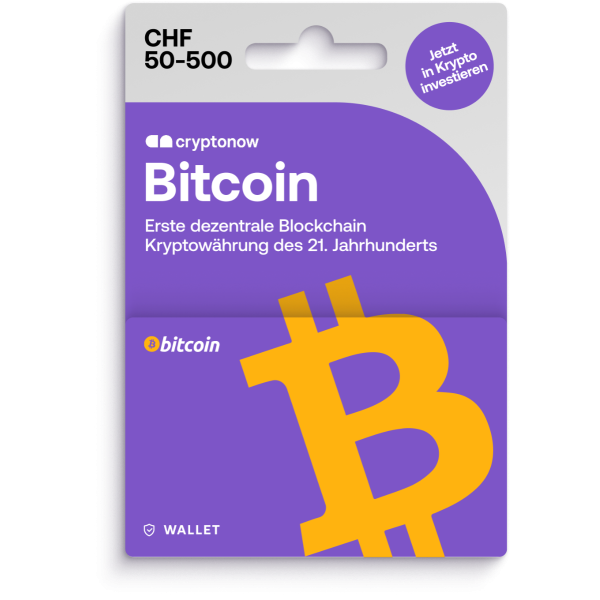
Bitcoin vouchers are sold by dedicated voucher brands and broad gift-card marketplaces. Crypto Voucher is the best-known pure-play; Coinsbee and Bitrefill cover crypto top-ups too. If you'd rather buy BTC directly (often cheaper for yourself), use a regulated exchange instead of a voucher.
A voucher's cost is mostly its convenience spread — the gap between the fiat you pay and the BTC you receive. Compare that to simply buying Bitcoin on an exchange, where the fee is typically a small, visible percentage. For gifting, the spread is often worth it; for stacking your own BTC, it usually isn't.
| Pay with | Typical cost | Notes |
|---|---|---|
| Bitcoin voucher (Crypto Voucher etc.) | Convenience spread baked in | Easiest to gift; not the cheapest BTC |
| Buying BTC on an exchange | Small % fee + spread | Cheapest for your own coins; needs an account |
| Paying for a voucher in crypto | Spread + network fee | Use a low-fee coin for the payment leg |
| Redeeming to your own wallet | On-chain withdrawal fee | Worth it to take true self-custody |
Bitcoin vouchers are usually global, but availability of purchase (and any KYC) depends on the seller and your country. The bigger 'gotcha' isn't region — it's the wallet: the recipient needs somewhere to redeem the BTC into. Set up a reputable wallet before gifting, and after redeeming, withdraw from any custodial holding to a wallet whose keys you control.
If you're buying BTC for yourself rather than gifting, skip the voucher premium entirely and buy on an exchange — a welcome bonus on a licensed platform can make your first purchase cheaper still, and you control the coins from the start.
I've gifted Bitcoin vouchers to relatives at Christmas, and they're brilliant for that — watching someone redeem their first sats is genuinely fun. But I always do two things: set up the wallet with them first, and explain the spread so they're not surprised that €50 didn't become exactly €50 of BTC. Manage expectations and a voucher is a lovely gift.
For your own stack, an exchange usually beats a voucher's spread. Buy BTC on a FinCEN-registered, Gibraltar-licensed platform and keep the coins under your control. New users can claim the current CEX.IO welcome bonus.
A voucher is a prepaid code redeemed for BTC — ideal for gifting and onboarding beginners, but it bakes in a convenience spread. Buying on an exchange is cheaper and gives you direct control, but requires an account and verification.
Usually you redeem on the issuer's platform, which credits a linked wallet or account; from there you withdraw to your own wallet. Always move the BTC to self-custody if you want to truly own it.
From reputable issuers, yes. Risks are buying from unknown resellers, losing the code/PIN, and not understanding the spread. Buy from established brands and treat the code like cash.
Many have an expiry or redemption window. Check the issuer's terms and redeem promptly rather than letting a code sit unused.